ServicesRain Chains
Rain Chains in Meggett, SC
A rain chain carries water off your roof in a visible, quiet stream instead of a messy sheet. We choose a chain big enough for the water that roof sends its way, hang it from a sealed outlet, tie down the bottom and set up a spot for the water to land.
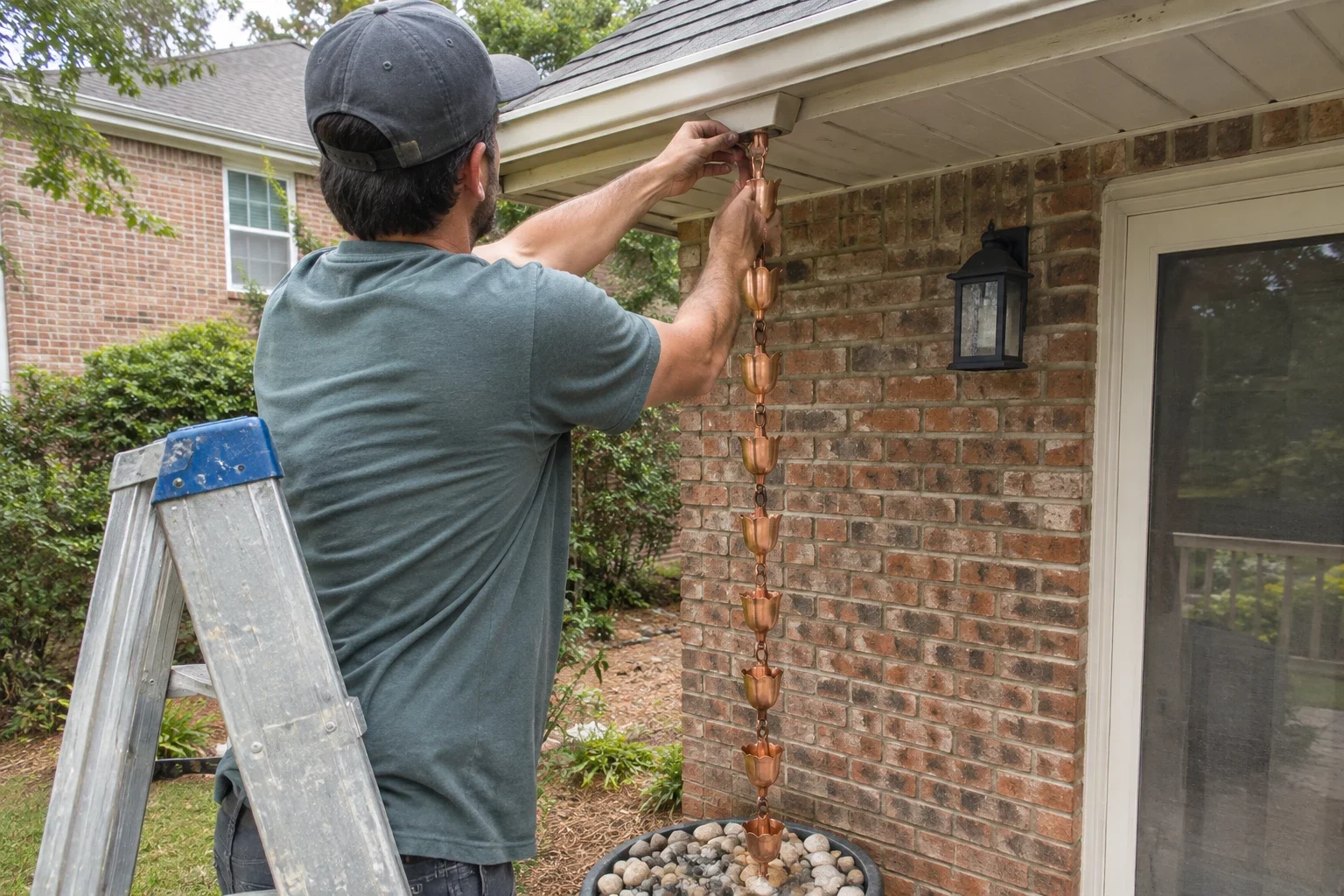
How a Rain Chain Works and Where It Fits
Picture a string of metal loops or small open cups hanging under an opening in your gutter. Rain grabs onto each link and slides down, so you get a steady trickle instead of a wall of water. Because you can see it and hear it, a chain belongs where people spend time, like a front door, a porch or a back patio.
There are places it won't work well. An open chain carries less water than an enclosed pipe, and on a large roof section with one outlet it can spill over in a heavy storm. We'll say so before you spend anything. Sometimes a smaller roof section is the better spot, sometimes two chains share the load, and sometimes the best advice is to skip that corner.
We do this work the way we'd want a neighbor to do it at our own house. You get a plain answer about where a chain makes sense, careful ladder work and a yard that looks the same as when we pulled in.
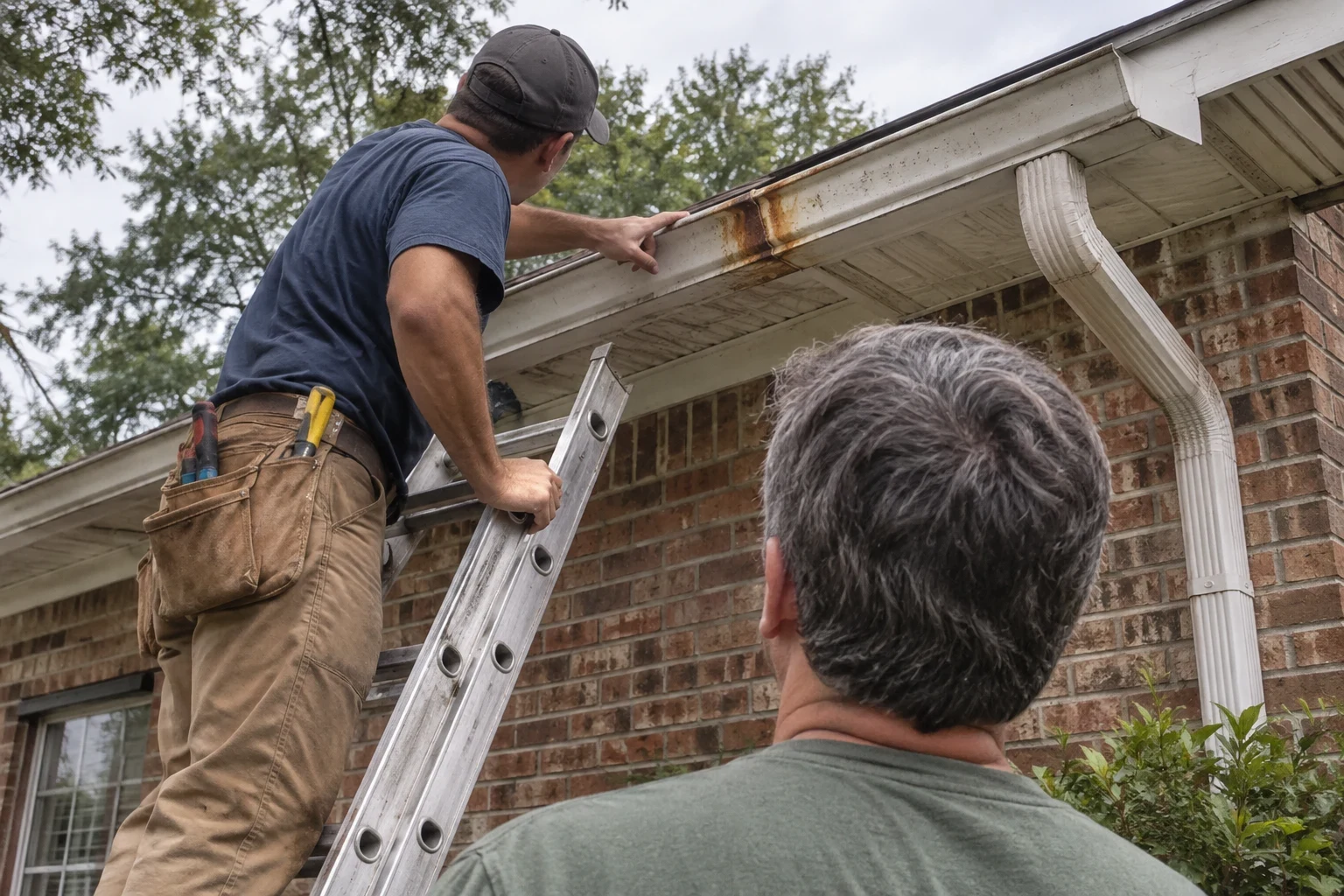
What the Work Includes
- 01
A sealed outlet sized to the chain
We cut a new opening or adapt the one you have so it fits the chain, then seal it so water doesn't creep along the seam. Most leaky chains trace back to a poorly fitted outlet.
- 02
A chain matched to the roof
Open link chains are light and simple. Cup chains catch more water and handle bigger flows. Which one we use depends on how much roof drains to that outlet.
- 03
Trimmed to the right length
We cut the chain so the bottom ends just over the basin or anchor. No extra links piled on the ground, and no short end flapping in the air.
- 04
An anchor at the bottom
We tie the chain off or stake it so a gusty afternoon doesn't swing it into your windows or siding.
- 05
Somewhere for the water to go
We put in a basin, a gravel bed or a splash area that carries water away from the foundation so it doesn't sit against your home.
- 06
A flow check and a tidy yard
Before we leave, we put water in the gutter and watch it run down the chain. Then we pick up leftover links, empty caulk tubes and anything else we brought.
Questions about Rain Chains?
Call(843) 919-4905Signs a Rain Chain Could Help
Water sheets off by your door
If rain pours off the roof edge right where you walk in, a chain can gather it into one spot you can step around.
The outlet sits by a porch or patio
A plain pipe there can look out of place. A chain does the same basic job and adds something to look at.
Splashing is eating your flower bed
A hard stream digging a hole in the mulch or soil tells you the water needs a guided path and a better landing spot.
An old chain swings or overflows
A chain that bangs the siding needs an anchor. One that spills over in storms may be too small for the roof above it.
The finish has gone chalky or rusty
Cheap coated steel breaks down fast, especially in the salt air near the coast. That is a good time to switch to copper or aluminum.
How the Job Goes
- 1
Check the gutter and what feeds it
First we figure out how much roof sends water to that spot and whether the gutter slopes the right way. A sagging or leaking gutter gets mentioned before anything else, because a chain can't do better than the gutter it hangs on.
- 2
Choose the chain and where water lands
We talk through links versus cups, which metal to use and where the water should end up. Then you get a written estimate that lists each piece.
- 3
Install, anchor and build the landing
A single chain doesn't take long. We fit the outlet, hang and trim the chain, tie down the bottom and set the basin or gravel, with drop cloths laid over flower beds and walkways.
- 4
Run water and show you around
We send water through so you can watch it work. Then we show you how to keep leaves away from the outlet so it stays open.
What Moves the Price
We don't quote a rain chain sight unseen. We come out, look at the roof and the ground, then price what your home actually needs. The chain, the hardware and the ground work each get their own line on the estimate. If something changes on the day, we stop and talk it over with you before doing it.
- Metal and style
- Copper runs higher than aluminum or coated steel. Cup chains run higher than open links. In damp, salty air, copper and aluminum last longer, which can make up the difference over time.
- How far the chain drops
- Hanging a chain off a two-story eave means more chain and more time up the ladder than a low porch roof. Adding a second or third chain raises the total, but it also splits the water so each one has less to carry.
- What happens at the bottom
- Driving an anchor stake takes a few minutes. Building a basin, laying a gravel bed or reshaping the soil so water heads away from the house takes more time and more material.
- The gutter above it
- A chain needs a sound gutter to hang from. If hangers are loose or a seam leaks, fixing that comes first and goes on the estimate. Our gutter repair page explains that work.
Rain Chain Questions
Will a rain chain handle a hard summer downpour?
On a smaller roof section, a cup chain usually keeps up fine. When a big, steep roof empties into one outlet, the water can outrun the cups and spill over the sides. We measure what drains to that spot and tell you honestly whether a chain can handle it.
Do I need new gutters to put in a rain chain?
Usually not. If your gutter is in good shape and slopes toward the outlet, we adapt that outlet and hang the chain right from it. If the gutter is rusted through or sagging badly, we'll talk with you about gutter installation first, so the chain has something solid to hang from.
Is the chain going to knock against my siding when it's windy?
Not after it's anchored. We tie it down or stake it at the bottom so it can't swing. We also set it out far enough from the wall that it won't rub the siding.
What metal lasts longest this close to the coast?
Copper and aluminum both stand up well to rust. Copper starts out shiny, turns brown and then picks up a green patina over the years, a look a lot of folks enjoy. Coated steel costs less, but once the coating chips it tends to rust.
Will leaves clog up a rain chain?
The chain itself almost never clogs. The outlet in the gutter above it is where leaves pile up. Gutter guards or gutter covers on that run keep more debris out, and we can tell you whether either one fits your roof.
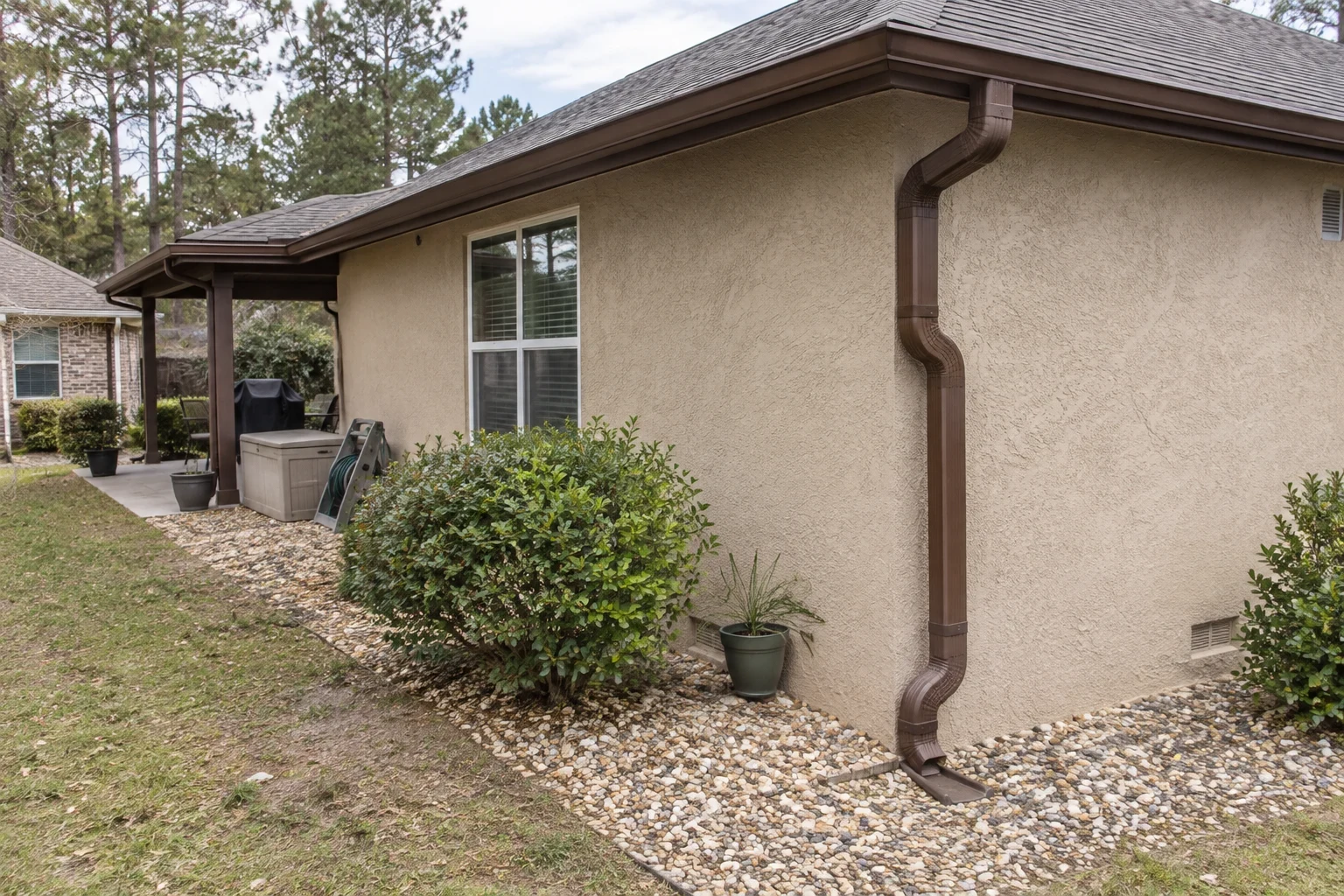
Want a Rain Chain by the Door?
Show us the spot you have in mind. We'll check the gutter, the roof that feeds it and the ground underneath, then give you a straight answer on whether a chain will work. If it will, you get a written estimate with every item listed.