Which Type of Gutter Guard Works Best for a Meggett Home?
Here is how each common guard holds up against pine needles, oak tassels and summer downpours, from the people who put them on.
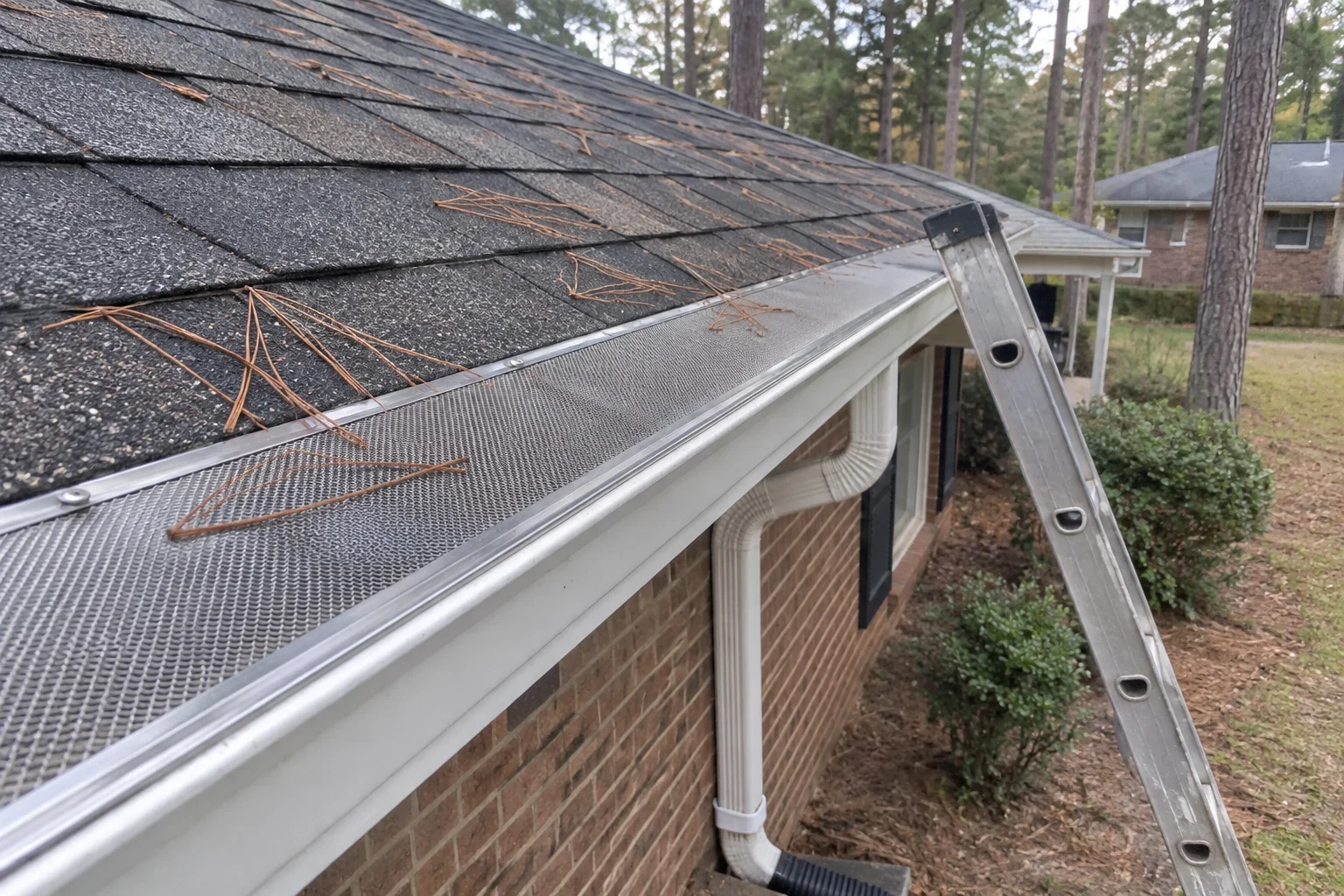
Which type of gutter guard works best?
For most homes around here, a stainless steel micro-mesh guard on a sturdy aluminum frame works best. It stops pine needles, oak tassels and grit while still taking in heavy summer rain. Screens, foam and brushes cost less up front but clog or let debris through sooner. Get a free consultation at (843) 919-4905.
What are the main types of gutter guards?
There are five kinds you will see on houses. They all try to do the same thing: let water in and keep leaves out. They go about it in very different ways, and that changes how long they last.
The right pick depends on what falls on your roof, how steep the roof is, and how much rain comes off it at once.
- Micro-mesh: a fine stainless steel mesh over a rigid frame. Blocks almost everything, including pine needles and roof grit.
- Screens: perforated metal or plastic panels with larger holes. Stop big leaves, but needles poke through and get stuck.
- Foam inserts: blocks that sit inside the gutter. Water soaks through, debris sits on top.
- Brush guards: long bristle tubes laid in the gutter. Easy to put in, but needles weave into the bristles.
- Reverse-curve covers: solid hoods that let water roll around a curved lip into the gutter while leaves slide off the front.
Why does micro-mesh hold up best in the Lowcountry?
Our trees are the reason. Pines drop needles most of the year, and live oaks dump leaves, tassels and pollen all at once in spring. Needles are the hard part. They slip through screens, tangle in brushes and lie across foam until the top is matted shut.
A good micro-mesh guard has holes too small for a needle to pass. Most of what lands on it dries out and blows off. What stays on top is easy to brush away from a ladder, and nothing is rotting down inside the gutter.
Material matters here too. Salt air and steady humidity rust cheap steel screens. Stainless mesh on an aluminum frame stands up to that much better, so the guard does not sag or stain your trim after a few years.
Is gutter foam better than other gutter guards?
We would not put foam on a house in this climate. It looks simple and it is cheap. But fine debris works its way into the top, seeds sprout in it, and in our humidity it stays damp. Over time it holds water and grime instead of passing it.
Once foam clogs, water runs over the front of the gutter like there was no guard at all. Then you have to pull every piece out and replace it. Brushes have a similar problem with pine needles, and they are heavy to lift out when they fill up.
Screens sit in the middle. They are fine under a big hardwood with broad leaves and no pines nearby. Under pines, expect to be back on the ladder pulling needles out of the holes.
What do roofers say about gutter guards?
Roofers mostly worry about one thing: how the guard attaches. Some guards are made to slide up under the first row of shingles. Done carelessly, that can lift or crack shingles and let wind-driven rain get under them. It can also cause trouble with a roof warranty.
We prefer guards that fasten to the front lip of the gutter and rest at the roof edge without prying shingles up. If your roof needs the guard tucked under, we check the shingles first and work them gently. We also make sure the gutter itself is sound. A guard on a sagging or leaking gutter just hides the problem, so sometimes gutter repair comes first.
Reverse-curve hoods get a fair knock from roofers too. In a hard summer thunderstorm, fast water off a steep roof can shoot right past the curve. On low-slope porches they work better.
Does the brand name matter?
Less than you might think. You will find plenty of online rankings and talk about which brand is number one. Some big outfits are also known for long in-home sales pitches and pressure to sign the same day. That is where a lot of the bad stories come from.
What actually decides whether a guard works is the type, the mesh material, the frame strength and how carefully it is installed. A well-made micro-mesh guard fitted right will outlast a famous one put on in a hurry. When we come out, we look at your trees, your roof pitch and your gutters, then tell you plainly which option makes sense. If a simple screen will do the job on your house, we will say so.
More questions about gutter guards
Are gutter guards and gutter covers the same thing?
People use the words loosely. We usually call mesh and screen products guards, and solid hoods like reverse-curve products covers. Both are on our gutter covers and gutter guards pages if you want the details.
Will a micro-mesh guard ever need attention?
Yes, a little. In heavy oak pollen season a film can build up on top, and a soft brush or a rinse from the ground clears it. That is a lot easier than scooping out a full gutter.
Can guards go on my existing gutters?
Often they can, if the gutters are solid, pitched right and firmly hung. If they are pulling away or rusted through, we will tell you and talk through repair or new gutter installation before adding guards.
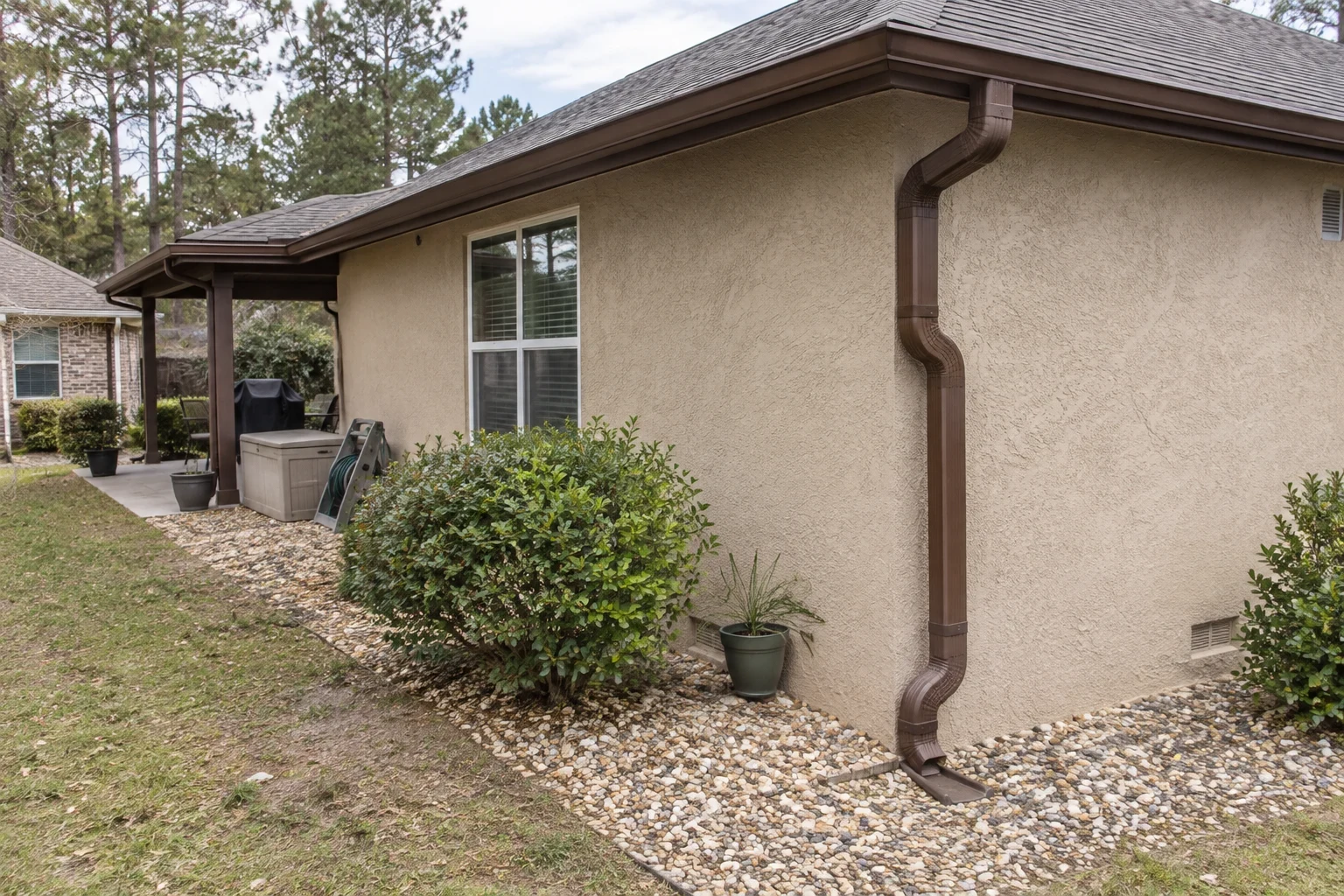
Not sure which guard fits your home?
We will come look at your roof, your trees and your gutters, then give you a straight answer on which guard will actually work. No pressure, just an honest look like we would give a neighbor.